Article Highlights
- We used a latent profile analysis to classify college students’ social media addiction into the categories of moderate use, mild dependence, and deep addiction.
- Sensation seeking and social anxiety were higher in the deep-addiction group than in the moderate-use and mild-dependence groups.
- Women were more likely to show moderate or mild dependence, while men showed a higher incidence of deep addiction.
- Those with positive roommate relationships and harmonious father–child relationships were more likely to belong to nonaddicted groups.
- Our theoretical model of social media addiction is more refined than previous models and provides an empirical basis for formulating differentiated prevention and intervention strategies for college students’ social media addiction.
With the rapid development of information technology, social media platforms have become an indispensable part of the daily lives of people, especially college students, allowing them to obtain information, interpersonal communication, and entertainment. According to the China Internet Network Information Center (2023), the internet penetration rate of Chinese netizens aged under 18 years had reached 97.2% by 2022, with 53.6% being frequent social media users. However, excessive use of social media can lead to social media addiction, a behavioral addiction marked by loss of self-regulation and control (Cauberghe et al., 2021). Studies have indicated that this addiction harms physical health, causing issues like dry eyes (Ma et al., 2022), poor nutrition (Mushtaq et al., 2023), obesity (Jolliff et al., 2020), and sleep disturbances (Kolhar et al., 2021), and contributes to cognitive impairment (Montag & Markett, 2023), anxiety, depression, and strained relationships (Ergün et al., 2025). Addiction among college students is recognized as a major public health concern that has significant implications for their well-being and academic performance (You et al., 2022).
Billieux’s (2012) dual-pathway model of social media addiction comprises two key pathways to social media addiction: impulsivity (e.g., poor self-control) and relationship maintenance (e.g., social anxiety). Supporting this assumption, compensatory internet use theory suggests that individuals turn to social media to cope with unmet real-life needs, such as social stimulation, which can temporarily alleviate distress but may lead to dependency (Kardefelt-Winther, 2014). While online engagement offers short-term relief (Qian et al., 2023), prolonged reliance can hinder offline relationships and foster addiction (Lin et al., 2023). In addition, high sensation seeking, which is marked by a desire for novelty and risk taking, heightens vulnerability to excessive use (Piko et al., 2024).
Existing studies have treated social media addiction as a binary variable (i.e., addicted/nonaddicted), thus overlooking its heterogeneity. This study used latent profile analysis to identify distinct subtypes of addiction among college students, examining their association with psychological traits (social anxiety, sensation seeking) and demographic factors (gender, rural vs. urban location, parental education).
Sensation Seeking and College Students’ Social Media Addiction
Sensation seeking reflects an individual’s pursuit of novel, intense experiences (Kruschwitz et al., 2012). According to optimal arousal theory, people seek stimulation to maintain ideal arousal levels, often through risky behaviors (Zuckerman, 1979). Purwoko and Sukamto (2013) found that each standard deviation increase in sensation seeking raised risky behavior probability by 37%. In particular, high sensation seekers tend to prefer risky and stimulating activities and may be more likely to be attracted to novel stimuli on social media, engaging in such activities to satisfy their pursuit of physiological arousal, excitement, or pleasurable states (Zuckerman et al., 1990). Meng et al. (2024) found that total and dimensional scores for sensation seeking were significantly correlated with internet addiction. Thus, this study proposed the following hypothesis:
Hypothesis 1: Latent profiles with higher social media addition will be related to higher sensation seeking.
Social Anxiety and College Students’ Social Media Addiction
Social anxiety involves nervousness and avoidance in social situations (Mattick & Clarke, 1998). According to Hofmann and Scepkowski (2006), social anxiety stems from an individual’s excessive focus on others’ negative evaluations of them and overestimation of the consequences of social failure. Although they may possess sufficient social skills, individuals tend to underestimate their own abilities, leading to avoidance behaviors that perpetuate anxiety (Hofmann, 2007). To cope, individuals with high social anxiety often turn to social media as an alternative to face-to-face interactions, creating a dependency cycle (Yen et al., 2012). The higher the social anxiety level among college students, the higher is their risk of social media addiction (Yang et al., 2023), and this correlation has exhibited cross-cultural consistency (Jahagirdar et al., 2024). Thus, we proposed the following hypothesis:
Hypothesis 2: Latent profiles with higher social media addition will be related to higher social anxiety.
Demographic Variables and Social Media Addiction
Social media addiction is influenced by various demographic factors. Gender differences exist: women are more prone to addiction due to social anxiety and loneliness, while men favor gaming and competitive platforms (Ciacchini et al., 2023). Only children (vs. those with siblings) may seek emotional support online due to loneliness (Jiang, 2017). Student leaders’ addiction risk varies, sometimes due to increased usage in dealing with class matters (Savci & Griffiths, 2021), and sometimes mitigated by real-world social support (Savci & Griffiths, 2021; Zhao, 2023). Poor roommate relationships and dysfunctional family dynamics (e.g., neglect, control) heighten addiction risk (Symons et al., 2017; Vaingankar et al., 2022). Parental education level has been found to be correlated with healthier usage (Nikken & Opree, 2018), and urban students face higher addiction risks than rural peers, possibly due to greater exposure and social demands (Islam et al., 2021). These factors interact through psychological, social, and familial mechanisms, thus shaping addiction susceptibility. Therefore, we proposed the following hypothesis:
Hypothesis 3: Latent categories of social media addiction will be related to demographic variables.
Method
Participants and Procedure
We distributed surveys to 1,600 college students using stratified cluster sampling and received 1,544 valid responses (96.5% response rate). The sample included 614 (39.8%) men and 930 (60.2%) women; 487 (31.5%) only children and 1,057 (68.5%) who had siblings; 505 (32.7%) student leaders and 1,039 (67.3%) nonleaders; and 1,124 (72.8%) rural/town dwellers versus 420 (27.2%) urban residents. There were 1,487 (96.3%) participants who reported having satisfactory relationships with roommates, while 57 (3.7%) had unsatisfactory relationships with roommates; 1,488 (96.4%) who had harmonious relationships with their fathers, and 56 (3.6%) who did not; and 1,492 (96.6%) who had harmonious relationships with their mothers, while 52 (3.4%) did not. In terms of father’s education level, for 950 (61.5%) participants it was junior high school or below, for 411 (26.6%) it was senior high school or secondary school, and for 183 (11.9%) it was junior college or above. In terms of mother’s education level, for 1,105 (71.6%) participants it was junior high school or below, for 315 (20.4%) it was senior high school or secondary school, and for 124 (8.0%) it was junior college or above. The mean age of the participants was 19.5 years (SD = 1.41; range = 18–25). We obtained informed consent from all respondents involved in the study.
Measures
General Demographic Questionnaire
Respondents reported their gender, sibling status, student-leader status, area of residence (urban/rural), level of satisfaction with roommates, level of harmony in relationships with parents, and parental education levels.
Social Media Addiction Scale
We used the 18 item Bergen Social Media Addiction Scale (Andreassen et al., 2016), which assesses six dimensions of social media addiction, each comprising three items: salience (e.g., “Do you find yourself spending too much time thinking about social media or planning to use it?”), conflict (e.g., “Even if you know that social media has a negative impact on your work/study or interpersonal relationships, will you still continue to use it?”), mood modification (e.g., “Do you often fail to control the time you spend on social media?”), withdrawal (e.g., “Do you feel uneasy or irritable when you try to reduce or stop using social media?”), tolerance (e.g., “Do you feel the need to constantly increase the time you spend on social media to gain a sense of satisfaction?”), and relapse (e.g., “Have you reduced your participation in other interests, hobbies or recreational activities because of using social media?”). Items are rated on a 5-point Likert scale (1 = very rarely, 5 = very often), with higher scores indicating greater addiction. In this study Cronbach’s alpha was .83, indicating the scale is reliable.
Social Anxiety Scale for Adolescents
We used the Social Anxiety Scale for Adolescents (Zhu, 2008), which contains 13 items spread across three dimensions: fear of negative evaluation (six items; e.g., “I feel like people talk about me behind my back”), unfamiliar situation avoidance (four items; e.g., “I always get very nervous when I make new friends”), and general situation avoidance (three items; e.g., “Even when I’m with very familiar people, I still feel shy”). Responses are scored on a 5-point Likert scale (1 = not at all true of me, 5 = extremely true of me), with higher scores indicating greater social anxiety. In this study Cronbach’s alpha was .82, indicating the scale is reliable.
Sensation Seeking Scale
We used the Sensation Seeking Scale (Zuckerman, 1993), which is a single-dimensional measure containing 11 items (e.g., “I enjoy exciting activities”). Items are rated on a binary response scale (0 = no, 1 = yes), with higher scores indicating greater sensation seeking. In this study Cronbach’s alpha was .79, indicating the scale is reliable.
Data Analysis
We conducted statistical analyses using SPSS 26.0 (chi-square tests, analysis of variance, logistic regression) and a latent profile analysis (LPA) using Mplus 8.3. For LPA, we compared the models with 1–5 latent profiles (Model 1 indicates that the research object is divided into one latent profile; Model 5 indicates that the research object is divided into five latent profiles) using the following fit indices: Akaike information criterion, Bayesian information criterion, adjusted Bayesian information criterion, for which lower values indicate a better fit; entropy, for which a score of ≥ .80 indicates over 90% classification accuracy; and Lo–Mendell–Rubin/bootstrapping likelihood ratio tests, where p < .05 favors k over k − 1 latent profiles.
Results
Common Method Bias Test
We used Harman’s single-factor test to check for common method bias. There were 11 factors with eigenvalues greater than 1, among which the first factor explained 20.02% of the variance, which is below the 40% threshold. Thus, there was no significant common method bias in this study (Zhou & Long, 2004).
Latent Profile Analysis: Number of Divided Classes
LPA of the 1,544 college students’ social media addiction (18 items) identified Model 3 as optimal, with a significant decrease in Akaike information criterion, Bayesian information criterion, and adjusted Bayesian information criterion; significant Lo–Mendell–Rubin-P and bootstrap likelihood ratios (p < .05); and acceptable entropy ≥ .80 (see Table 1).
Table 1. Latent Profile Analysis of Social Media Addiction Among College Students

Note. N = 1,544. LMR-p = Lo–Mendell–Rubin p value; BLRT = bootstrapping likelihood ratio.
We identified three latent profiles of social media addiction (see Figure 1). First was the moderate-use group (n = 493), which demonstrated the lowest scores across all dimensions; second was the mild-dependence group (n = 618), which showed intermediate scores; and third was the deep-addiction group (n = 433), which exhibited the highest scores.
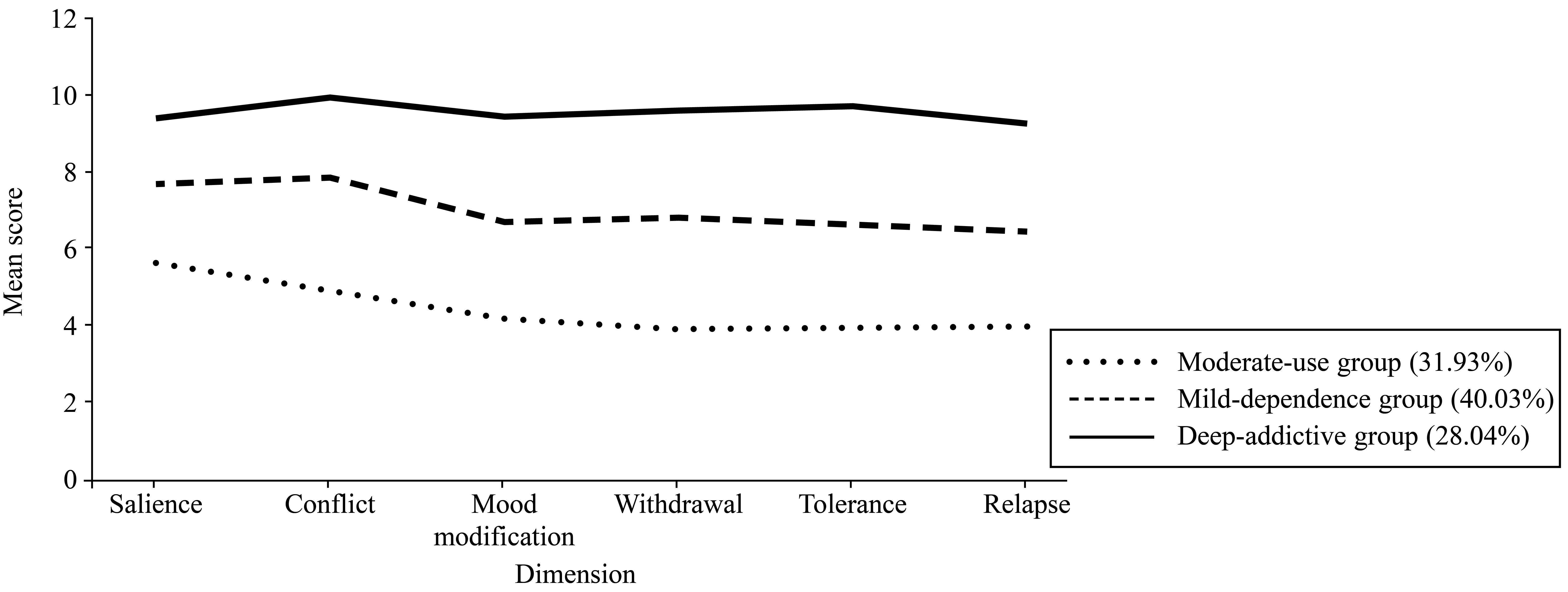
Figure 1. Latent Profile Analysis Categories of Social Media Addiction Among College Students
Single-Factor Analysis of Latent Profiles of Social Media Addiction Among College Students
The results showed significant group differences in gender, roommate relationship satisfaction levels, and parental relationship harmony levels (see Table 2).
Table 2. Univariate Analysis of Latent Categories of Social Media Addiction Among College Students
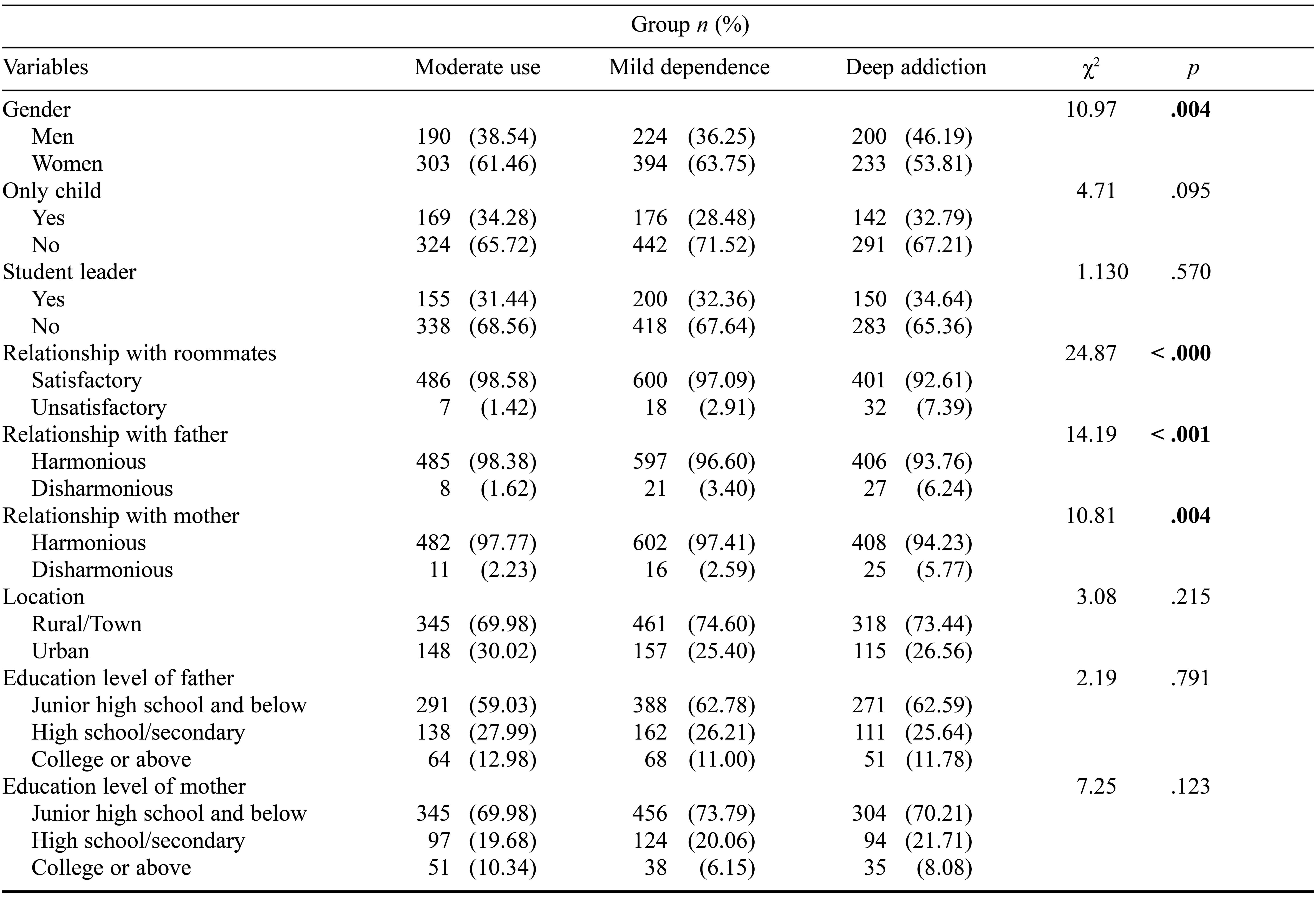
Note. Moderate-use group n = 493; mild-dependence group n = 618; deep-addiction group n = 433.
Multifactor Analysis of Latent Profiles of Social Media Addiction Among College Students
Multivariate logistic regression analysis (reference group = deep addiction) revealed that men had lower odds of being in the moderate-use and mild-dependence categories; satisfactory roommate relationships predicted moderate-use and mild-dependence group membership; and positive father relationships increased the odds of being in the moderate-use group (see Table 3).
Table 3. Multivariate Logistic Regression Analysis of Latent Profiles of Social Media Addiction Among College Students
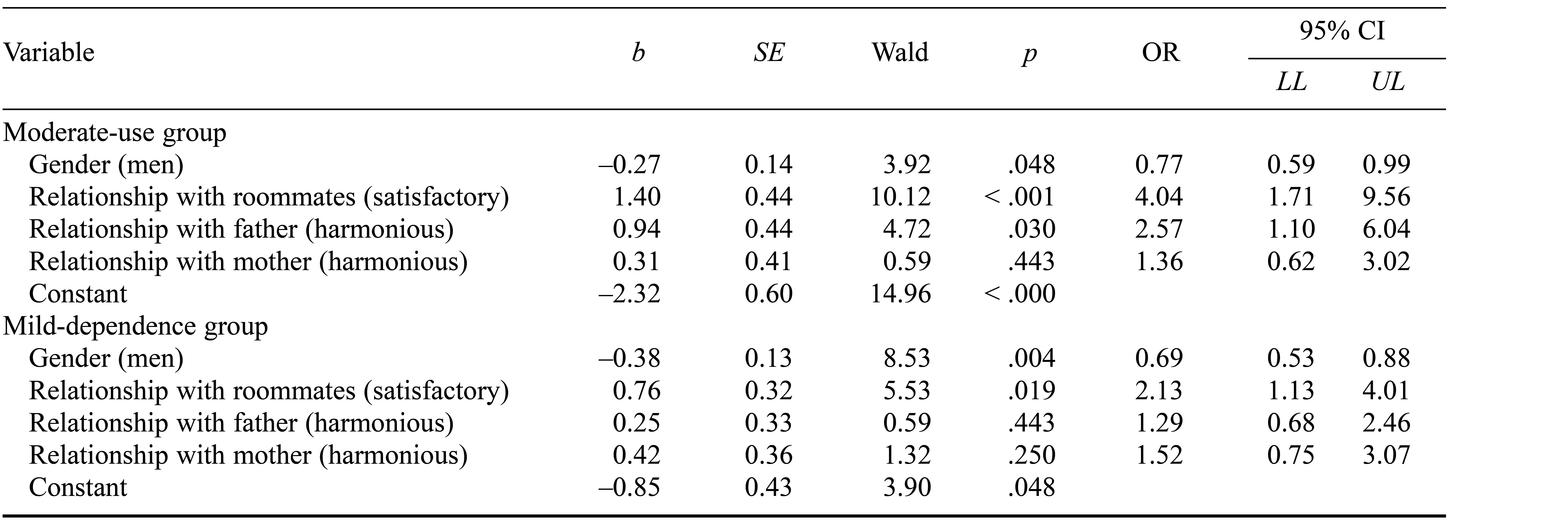
Note. The deep-addiction group was used as the reference category. The control group was women, unsatisfactory relationship with roommates, poor relationship with father, and poor relationship with mother. OR = odds ratio; CI = confidence interval; LL = lower limit; UL = upper limit.
Social Media Addiction, Social Anxiety, and Sensation Seeking in College Students
We conducted a correlation analysis of social media addiction, social anxiety, and sensation seeking (see Table 4). Social media addiction was positively correlated with social anxiety, social media addiction was positively correlated with sensation seeking, and social anxiety was positively correlated with sensation seeking.
Table 4. Correlation Analysis of Social Media Addiction, Social Anxiety, and Sensation Seeking

Analysis of variance results showed that scores for sensation seeking and social anxiety in the deep-addiction group were higher than those in the moderate-use and mild-dependence groups (see Table 5). In sum, all three hypotheses were supported.
Table 5. Comparison of Social Media Addiction, Social Anxiety, and Sensation Seeking Levels Among College Students

Note. Values are M ± SD. Pairwise comparisons were conducted between multiple groups: same letter indicates p > .05; different letters indicate p < .05.
Discussion
This study employed LPA to examine social media addiction among college students, identifying three distinct groups: moderate use (31.93%), mild dependence (40.03%), and deep addiction (28.04%). Most of our participants exhibited mild-to-severe social media dependence, aligning with prior research on adolescent social media engagement (Liu et al., 2024). Potential explanations for these findings are as follows: social media may serve as an emotional outlet for academic and social pressures (Vaingankar et al., 2022), platform features may satisfy self-presentation and social needs (Ozanne et al., 2017), and limited extracurricular alternatives can increase reliance on social media for entertainment and peer connection (Xu et al., 2023). Poor time management may exacerbate usage, potentially harming academic performance and well-being (Dai et al., 2022).
Our study found that men exhibited higher rates of deep social media addiction than women did, and that this outcome influenced by psychological, behavioral, and sociocultural factors. Key explanations could include men’s stronger competitive drive for quantifiable achievements (e.g., gaming rankings, follower counts; Hussain & Griffiths, 2009), greater tendency to use social media for escapism rather than emotional support when stressed (Kuss et al., 2014), and preferential engagement with high-stimulation entertainment content (e.g., gaming, videos; Mihara & Higuchi, 2017).
College students with healthy father–child relationships were more likely to exhibit moderate (vs. addictive) social media use. This can be attributed to several factors: First, a strong father–child relationship provides emotional stability, reducing the need to seek validation through social media (Valkenburg et al., 2021). These students often have better emotional regulation and coping strategies, such as seeking support from family or engaging in healthy activities (Amato & Fowler, 2002). Second, fathers play a key role in shaping values like self-discipline, which promote balanced social media habits (Williams & Ciarrochi, 2020). Third, children often emulate the behaviors their father model, such as adopting healthier lifestyles, including regulated social media use (Knafo & Schwartz, 2003).
College students with satisfactory roommate relationships were more likely to exhibit moderate or mild social media use. Strong roommate bonds provide emotional support and companionship, reducing the need for excessive social media reliance (Eisenberg et al., 2014). These relationships alleviate loneliness and anxiety, making social media a supplement to rather than a substitute for in-person interaction (Erb et al., 2014). Further, healthy roommate dynamics encourage offline activities (e.g., sports, studying), decreasing social media dependence while improving well-being, because shared interests promote face-to-face interactions over prolonged social media use (Przybylski & Weinstein, 2013). Thus, satisfactory roommate relationships can foster a balanced lifestyle, acting as both a mental health buffer and a catalyst for developing healthy social media habits.
Our study found that scores for both sensation-seeking behavior and social anxiety were higher in the deep-addiction group compared to moderate-use and mild-addiction groups. Social media platforms provide immediate and diverse sensory stimulation through short videos, games, and dynamic updates, which particularly appeals to high sensation seekers, who crave novel, complex, and intense stimuli. These users are drawn to the endless novelty of social media, where constant content updates satisfy their exploratory drive (Montag et al., 2019). This instant feedback loop can trap them in a so-called refresh cycle, which reinforces continuous engagement (Serenko & Turel, 2015). Meanwhile, individuals with high social anxiety may avoid face-to-face interactions, finding social media a safer alternative due to its controllable, text-based, and asynchronous nature (Primack et al., 2017). However, prolonged reliance on virtual socialization can weaken real-world social skills and exacerbate loneliness (Bonebrake, 2002). Excessive use as a substitute for offline interaction may lead to virtual social dependence, where connections lack emotional depth and there is worsening anxiety and isolation. High sensation-seeking behavior and social anxiety may interact in the context of social media use—high sensation seekers pursue stimulation, while socially anxious users escape reality, making them more prone to severe addiction (Reed & Haas, 2025). For instance, sensation seekers explore new features, while anxious users rely on them for stress relief, creating a reinforcing dependency (Gugushvili et al., 2024).
Limitations and Future Research
Due to research resource limitations, the sample did not adequately cover groups of college students from different regions, types of institutions, or professional backgrounds; thus, we employed cross-sectional data. Although our analyses revealed association patterns among social media addiction, sensation seeking, and social anxiety, we were unable to clearly determine the causal relationships among the variables. In the future, longitudinal tracking or experimental designs can be adopted to further verify the temporal mechanism. In addition, this study focused on the impact of sensation seeking and social anxiety on social media addiction. Other potential factors, such as depressive symptoms, self-esteem levels, and frequency of offline social interaction, may also affect this mechanism. Future research can incorporate variables to enhance the explanatory power and integrity of the model. All variables were assessed with self-reported scales and are, therefore, susceptible to social desirability. In the future, multisource data such as peer evaluations and application software background records can be combined to enhance objectivity.
Andreassen, C. S., Billieux, J., Griffiths, M. D., Kuss, D. J., Demetrovics, Z., Mazzoni, E., & Pallesen, S. (2016). The relationship between addictive use of social media and video games and symptoms of psychiatric disorders: A large-scale cross-sectional study.
Psychology of Addictive Behaviors, 30(2), 252–262.
https://doi.org/10.1037/adb0000160
Cauberghe, V., Van Wesenbeeck, I., De Jans, S., Hudders, L., & Ponnet, K. (2021). How adolescents use social media to cope with feelings of loneliness and anxiety during COVID-19 lockdown.
Cyberpsychology, Behavior, and Social Networking, 24(4), 250–257.
https://doi.org/10.1089/cyber.2020.0478
Ciacchini, R., Orrù, G., Cucurnia, E., Sabbatini, S., Scafuto, F., Lazzarelli, A., Miccoli, M., Gemignani, A., & Conversano, C. (2023). Social media in adolescents: A retrospective correlational study on addiction.
Children, 10(2), Article 278.
https://doi.org/10.3390/children10020278
Dai, B., Zhang, P. J., & Yang, Z. G. (2022). Research progress on influencing factors and consequences of social media overuse [In Chinese]. Chinese Journal of Health Psychology, 30(10), 1582–1590.
Erb, S. E., Renshaw, K. D., Short, J. L., & Pollard, J. W. (2014). The importance of college roommate relationships: A review and systemic conceptualization.
Journal of Student Affairs Research and Practice, 51(1), 43–55.
https://doi.org/10.1515/jsarp-2014-0004
Ergün, N., Özkan, Z., & Griffiths, M. D. (2025). Social media addiction and poor mental health: Examining the mediating roles of internet addiction and phubbing.
Psychological Reports, 128(2), 723–743.
https://doi.org/10.1177/00332941231166609
Gugushvili, N., Täht, K., Schruff-Lim, E. M., Ruiter, R. A. C., & Verduyn, P. (2024). The association between neuroticism and problematic social networking sites use: The role of fear of missing out and self-control.
Psychological Reports, 127(4), 1727–1750.
https://doi.org/10.1177/00332941221142003
Hofmann, S. G. (2007). Cognitive factors that maintain social anxiety disorder: A comprehensive model and its treatment implications.
Cognitive Behaviour Therapy, 36(4), 193–209.
https://doi.org/10.1080/16506070701421313
Hofmann, S. G., & Scepkowski, L. A. (2006). Social self-reappraisal therapy for social phobia: Preliminary findings.
Journal of Cognitive Psychotherapy, 20(1), 45–57.
https://doi.org/10.1891/jcop.20.1.45
Hussain, Z., & Griffiths, M. D. (2009). The attitudes, feelings, and experiences of online gamers: A qualitative analysis.
CyberPsychology & Behavior, 12(6), 747–753.
https://doi.org/10.1089/cpb.2009.0059
Islam, M. S., Sujan, M. S. H., Tasnim, R., Mohona, R. A., Ferdous, M. Z., Kamruzzaman, S., Toma, T. Y., Sakib, M. N., Pinky, K. N., Islam, M. R., Siddique, M. A. B., Anter, F. S., Hossain, A., Hossen, I., Sikder, M. T., & Pontes, H. M. (2021). Problematic smartphone and social media use among Bangladeshi college and university students amid COVID-19: The role of psychological well-being and pandemic related factors.
Frontiers in Psychiatry, 12, Article 647386.
https://doi.org/10.3389/fpsyt.2021.647386
Jahagirdar, V., Sequeira, L. A., Kinattingal, N., Roohi, T. F., Alshehri, S., Shakeel, F., & Mehdi, S. (2024). Assessment of the impact of social media addiction on psychosocial behaviour like depression, stress, and anxiety in working professionals.
BMC Psychology, 12(1), Article 352.
https://doi.org/10.1186/s40359-024-01850-2
Jiang, Y. (2017). Relationship between college students’ social media dependence on mobile phones and the sense of loneliness (Master’s thesis) [In Chinese]. Hebei Normal University.
Jolliff, A. F., Moreno, M. A., & D’Angelo, J. (2020). The mediating role of depressive and anxiety symptoms in the association between obesity and problematic social media use in young adults.
Obesity Science & Practice, 6(5), 454–459.
https://doi.org/10.1002/osp4.434
Kardefelt-Winther, D. (2014). A conceptual and methodological critique of internet addiction research: Towards a model of compensatory internet use.
Computers in Human Behavior, 31, 351–354.
https://doi.org/10.1016/j.chb.2013.10.059
Kolhar, M., Kazi, R. N. A., & Alameen, A. (2021). Effect of social media use on learning, social interactions, and sleep duration among university students.
Saudi Journal of Biological Sciences, 28(4), 2216–2222.
https://doi.org/10.1016/j.sjbs.2021.01.010
Kruschwitz, J. D., Simmons, A. N., Flagan, T., & Paulus, M. P. (2012). Nothing to lose: Processing blindness to potential losses drives thrill and adventure seekers.
NeuroImage, 59(3), 2850–2859.
https://doi.org/10.1016/j.neuroimage.2011.09.048
Kuss, D. J., Griffiths, M. D., Karila, L., & Billieux, J. (2014). Internet addiction: A systematic review of epidemiological research for the last decade.
Current Pharmaceutical Design, 20(25), 4026–4052.
https://doi.org/10.2174/13816128113199990617
Lin, S., Mastrokoukou, S., & Longobardi, C. (2023). Social relationships and social media addiction among adolescents: Variable-centered and person-centered approaches.
Computers in Human Behavior, 147, Article 107840.
https://doi.org/10.1016/j.chb.2023.107840
Liu, M., Zhuang, A., Norvilitis, J. M., & Xiao, T. N. (2024). Usage patterns of short videos and social media among adolescents and psychological health: A latent profile analysis.
Computers in Human Behavior, 151(2), Article 108007.
https://www.doi.org/10.1016/j.chb.2023.108007
Ma, J., Zhu, H., Guo, W., Li, R., Shen, S., Wang, Y., Huang, D., Zhang, X., Fu, Z., Zhao, A., Chen, D., Si, J., Zhang, J., Xu, S., Wang, L., & Liu, H. (2022). Association of different digital media experiences with paediatric dry eye in China: A population-based study.
BMJ Open, 12(11), Article e062850.
https://doi.org/10.1136/bmjopen-2022-062850
Mattick, R. P., & Clarke, J. C. (1998). Development and validation of measures of social phobia scrutiny fear and social interaction anxiety.
Behaviour Research and Therapy, 36(4), 455–470.
https://doi.org/10.1016/s0005-7967(97)10031-6
Meng, Y., Li, M., & He, J. (2024). Sensation seeking and social network addiction among college students: A moderated mediation model.
Current Psychology, 43(12), 10979–10988.
https://doi.org/10.1007/s12144-023-05189-6
Mihara, S., & Higuchi, S. (2017). Cross-sectional and longitudinal epidemiological studies of internet gaming disorder: A systematic review of the literature.
Psychiatry and Clinical Neurosciences, 71(7), 425–444.
https://doi.org/10.1111/pcn.12532
Montag, C., Lachmann, B., Herrlich, M., & Zweig, K. (2019). Addictive features of social media/messenger platforms and freemium games against the background of psychological and economic theories.
International Journal of Environmental Research and Public Health, 16(14), Article 2612.
https://doi.org/10.3390/ijerph16142612
Montag, C., & Markett, S. (2023). Social media use and everyday cognitive failure: Investigating the fear of missing out and social networks use disorder relationship.
BMC Psychiatry, 23, Article 872.
https://doi.org/10.1186/s12888-023-05371-x
Mushtaq, T., Ashraf, S., Hameed, H., Irfan, A., Shahid, M., Kanwal, R., Aslam, M. A., Shahid, H., Koh-E-Noor, Shazly, G. A., Khan, M. A., & Jardan, Y. A. B. (2023). Prevalence of eating disorders and their association with social media addiction among youths.
Nutrients, 15(21), Article 4687.
https://doi.org/10.3390/nu15214687
Nikken, P., & Opree, S. J. (2018). Guiding young children’s digital media use: SES-differences in mediation concerns and competence.
Journal of Child and Family Studies, 27(6), 1844–1857.
https://doi.org/10.1007/s10826-018-1018-3
Ozanne, M., Cueva Navas, A., Mattila, A. S., & Van Hoof, H. B. (2017). An investigation into Facebook “liking” behavior: An exploratory study.
Social Media + Society, 3(2), Article 2056305117706785.
https://doi.org/10.1177/2056305117706785
Piko, B. F., Krajczár, S. K., & Kiss, H. (2024). Social media addiction, personality factors and fear of negative evaluation in a sample of young adults.
Youth, 4(1), 357–368.
https://doi.org/10.3390/youth4010025
Primack, B. A., Shensa, A., Sidani, J. E., Whaite, E. O., Lin, L. Y., Rosen, D., Colditz, J. B., Radovic, A., & Miller, E. (2017). Social media use and perceived social isolation among young adults in the U.S.
American Journal of Preventive Medicine, 53(1), 1–8.
https://doi.org/10.1016/j.amepre.2017.01.010
Przybylski, A. K., & Weinstein, N. (2013). Can you connect with me now? How the presence of mobile communication technology influences face-to-face conversation quality.
Journal of Social and Personal Relationships, 30(3), 237–246.
https://doi.org/10.1177/0265407512453827
Purwoko, D., & Sukamto, M. E. (2013). Sensation seeking and risk-taking behaviour among late adolescents at Surabaya University [In Indonesian].
Jurnal Sosial & Humaniora, 7(1), 64–74.
https://doi.org/10.24123/jsh.v7i1.679
Qian, L., Hu, W., & Jiang, M. (2023). The impact of online social behavior on college student’s life satisfaction: Chain-mediating effects of perceived social support and core self-evaluation.
Psychology Research and Behavior Management, 16, 4677–4683.
https://doi.org/10.2147/PRBM.S433156
Savci, M., & Griffiths, M. D. (2021). The development of the Turkish Social Media Craving Scale (SMCS): A validation study.
International Journal of Mental Health and Addiction, 19(2), 359–373.
https://doi.org/10.1007/s11469-019-00062-9
Serenko, A., & Turel, O. (2015). Integrating technology addiction and use: An empirical investigation of Facebook users.
AIS Transactions on Replication Research, 1, Article 2.
https://doi.org/10.17705/1atrr.00002
Symons, K., Ponnet, K., Walrave, M., & Heirman, W. (2017). A qualitative study into parental mediation of adolescents’ internet use.
Computers in Human Behavior, 73, 423–432.
https://doi.org/10.1016/j.chb.2017.04.004
Vaingankar, J. A., van Dam, R. M., Samari, E., Chang, S., Seow, E., Chua, Y. C., Luo, N., Verma, S., & Subramaniam, M. (2022). Social media-driven routes to positive mental health among youth: Qualitative enquiry and concept mapping study.
JMIR Pediatrics and Parenting, 5(1), Article e32758.
https://doi.org/10.2196/32758
Valkenburg, P., Beyens, I., Pouwels, J. L., van Driel, I. I., & Keijers, L. (2021). Social media use and adolescents’ self-esteem: Heading for a person-specific media effects paradigm.
Journal of Communication, 71(1), 56–78.
https://doi.org/10.1093/joc/jqaa039
Williams, K. E., & Ciarrochi, J. (2020). Perceived parenting styles and values development: A longitudinal study of adolescents and emerging adults.
Journal of Research on Adolescence, 30(2), 541–558.
https://doi.org/10.1111/jora.12542
Xu, X., Han, W., & Liu, Q. (2023). Peer pressure and adolescent mobile social media addiction: Moderation analysis of self-esteem and self-concept clarity.
Frontiers in Public Health, 11, Article 1115661.
https://doi.org/10.3389/fpubh.2023.1115661
Yang, F., Li, M., & Han, Y. (2023). Whether and how will using social media induce social anxiety? The correlational and causal evidence from Chinese society.
Frontiers in Psychology, 14(29), Article 1217415.
https://doi.org/10.3389/fpsyg.2023.1217415
Yen, J.-Y., Yen, C.-F., Chen, C.-S., Wang, P.-W., Chang, Y.-H., & Ko, C.-H. (2012). Social anxiety in online and real-life interaction and their associated factors.
Cyberpsychology, Behavior, and Social Networking, 15(1), 7–12.
https://doi.org/10.1089/cyber.2011.0015
You, Y., Yang-Huang, J., Raat, H., & Van Grieken, A. (2022). Social media use and health-related quality of life among adolescents: Cross-sectional study.
JMIR Mental Health, 9(10), Article e39710.
https://doi.org/10.2196/39710
Zhao, L. (2023). Social media addiction and its impact on college students’ academic performance: The mediating role of stress.
The Asia–Pacific Education Researcher, 32(1), 81–90.
https://doi.org/10.1007/s40299-021-00635-0
Zhu, H. (2008). A study on the relationship between adolescent attachment and social anxiety (Master’s thesis) [In Chinese]. Southwest University.
Zuckerman, M. (1979). Sensation seeking: Beyond the optimal level of arousal. Lawrence Erlbaum Associates.
Zuckerman, M. (1993). P-impulsive sensation seeking and its behavioral, psychophysiological and biochemical correlates.
Neuropsychobiology, 28(1–2), 30–36.
https://doi.org/10.1159/000118996
Zuckerman, M., Ball, S., & Black, J. (1990). Influences of sensation seeking, gender, risk appraisal, and situational motivation on smoking.
Addictive Behaviors, 15(3), 209–220.
https://doi.org/10.1016/0306-4603(90)90064-5